
Designing Reactivity and Selectivity in Catalysis
Our research seeks to understand how catalytic systems generate reactivity and selectivity, and to use this understanding to develop new reactions and more efficient approaches to chemical synthesis. We are particularly interested in transformations whose outcomes cannot be controlled simply by identifying a more active catalyst. Instead, we investigate how catalyst structure, reaction pathways, intermediates, reversible processes and competing elementary steps collectively determine the behaviour of the overall system.
By combining mechanistic investigation with catalyst and reaction design, we aim to uncover new modes of reactivity, achieve more precise control of selectivity and move beyond the optimisation of individual catalytic cycles towards deliberate control of the wider reaction systems in which they operate.
A central objective of our research is to convert simple and readily available starting materials into structurally diverse and valuable products under mild and selective conditions. We therefore study both individual catalytic transformations and more complex systems in which several pathways interact. This allows us to address complementary challenges: creating reactivity where conventional methods are ineffective, controlling selectivity in established processes, and using interconnected catalytic reactions to access outcomes that cannot be achieved through a single catalytic cycle.
Our research programme is organised around three interconnected themes:
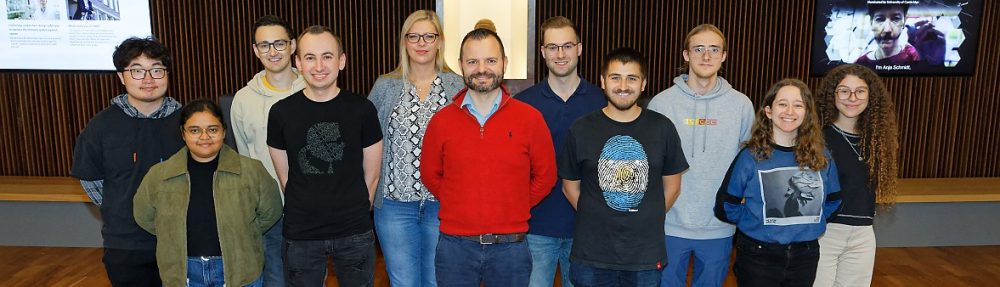
 The Dydio Group